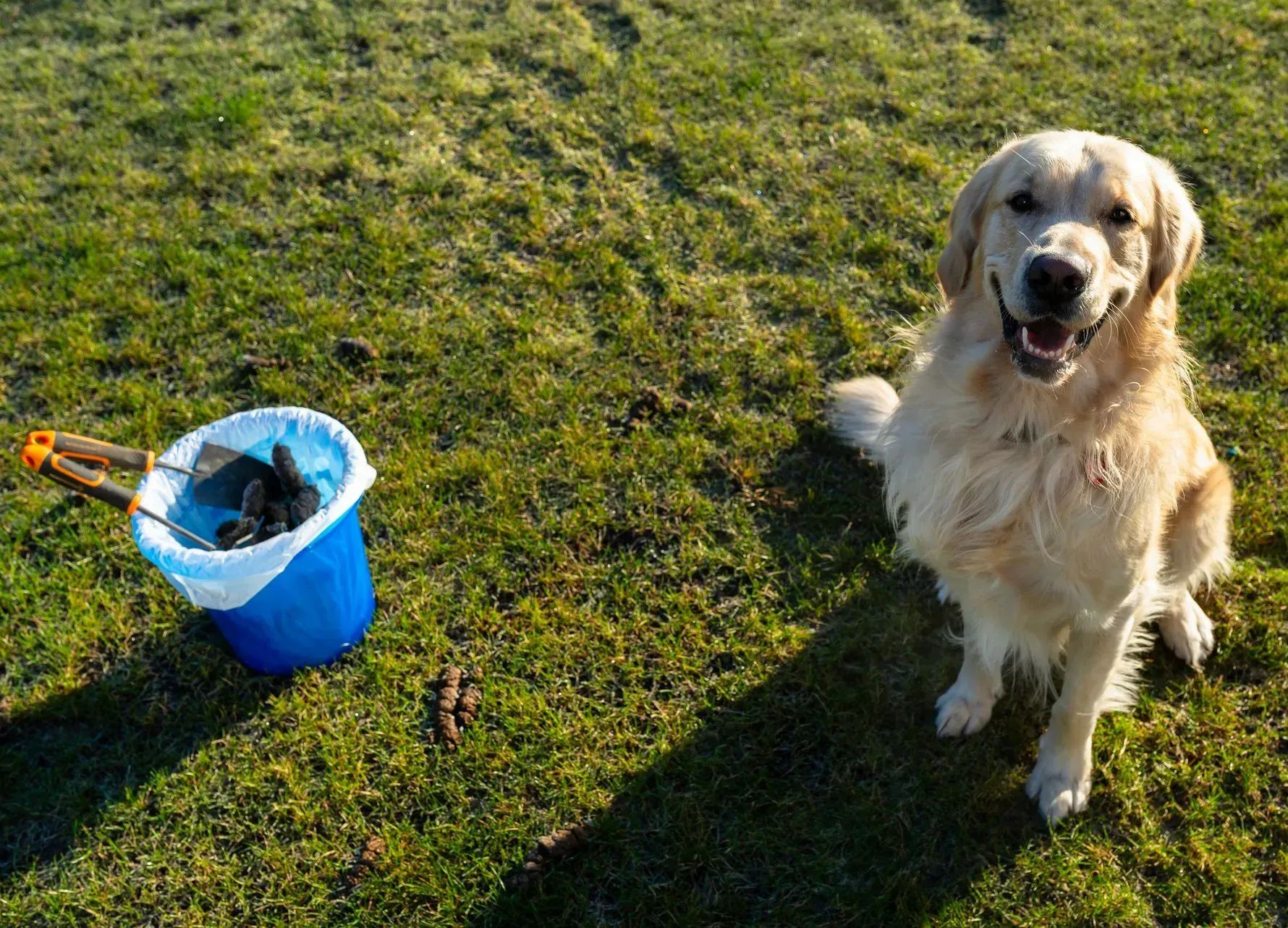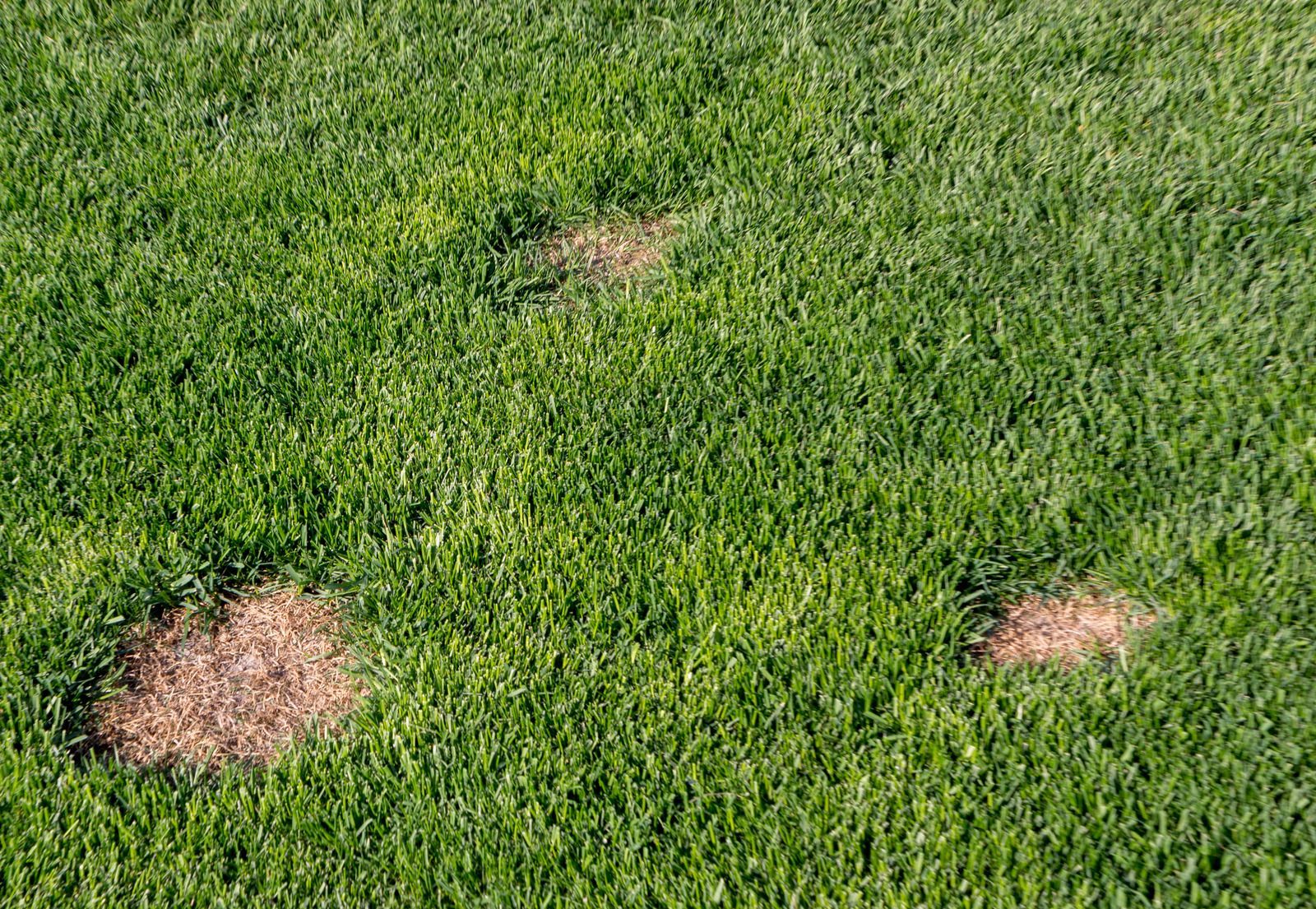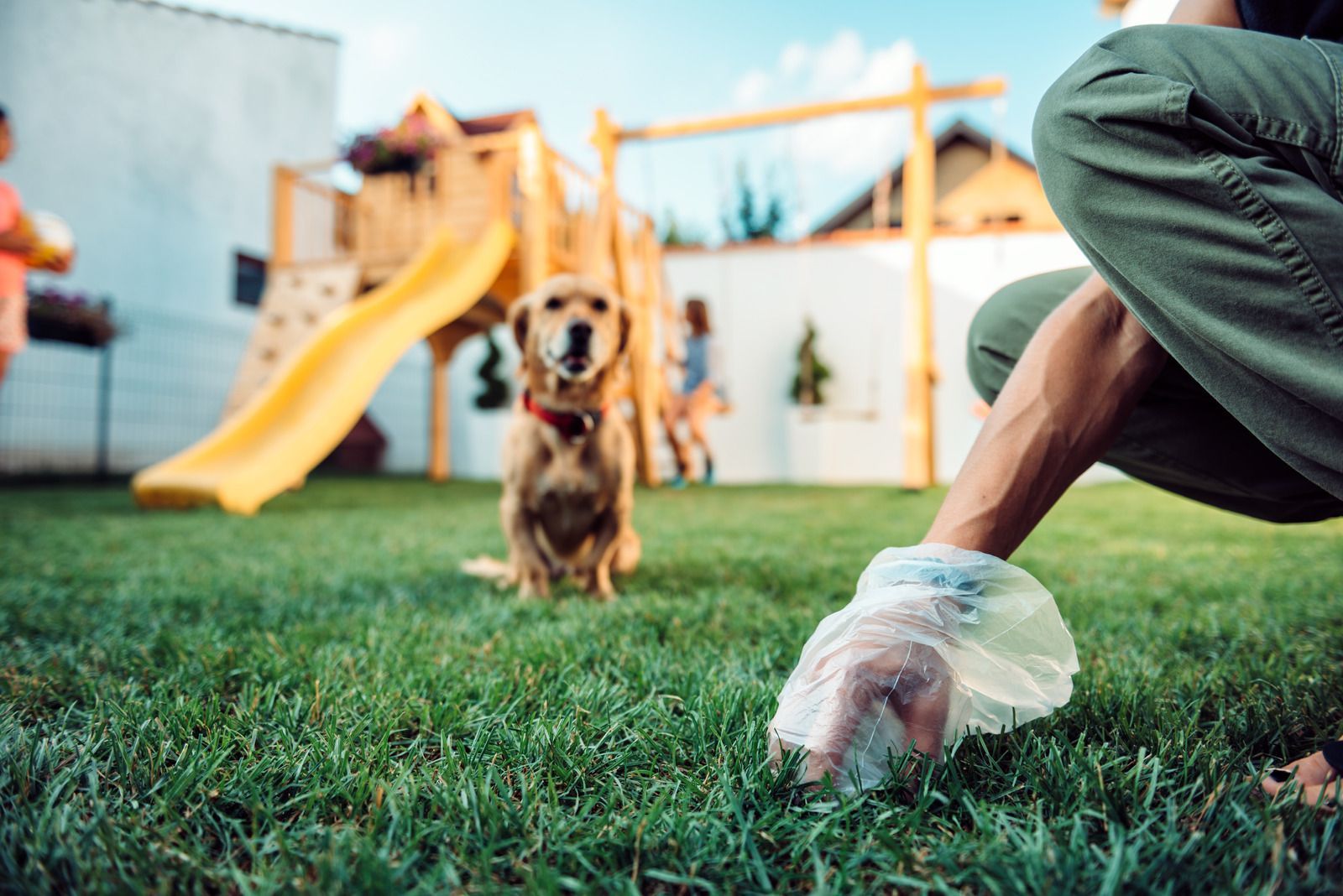
Flies and Gnats Swarming Your Backyard All Summer? The Pet-Waste Link
August 25, 2026
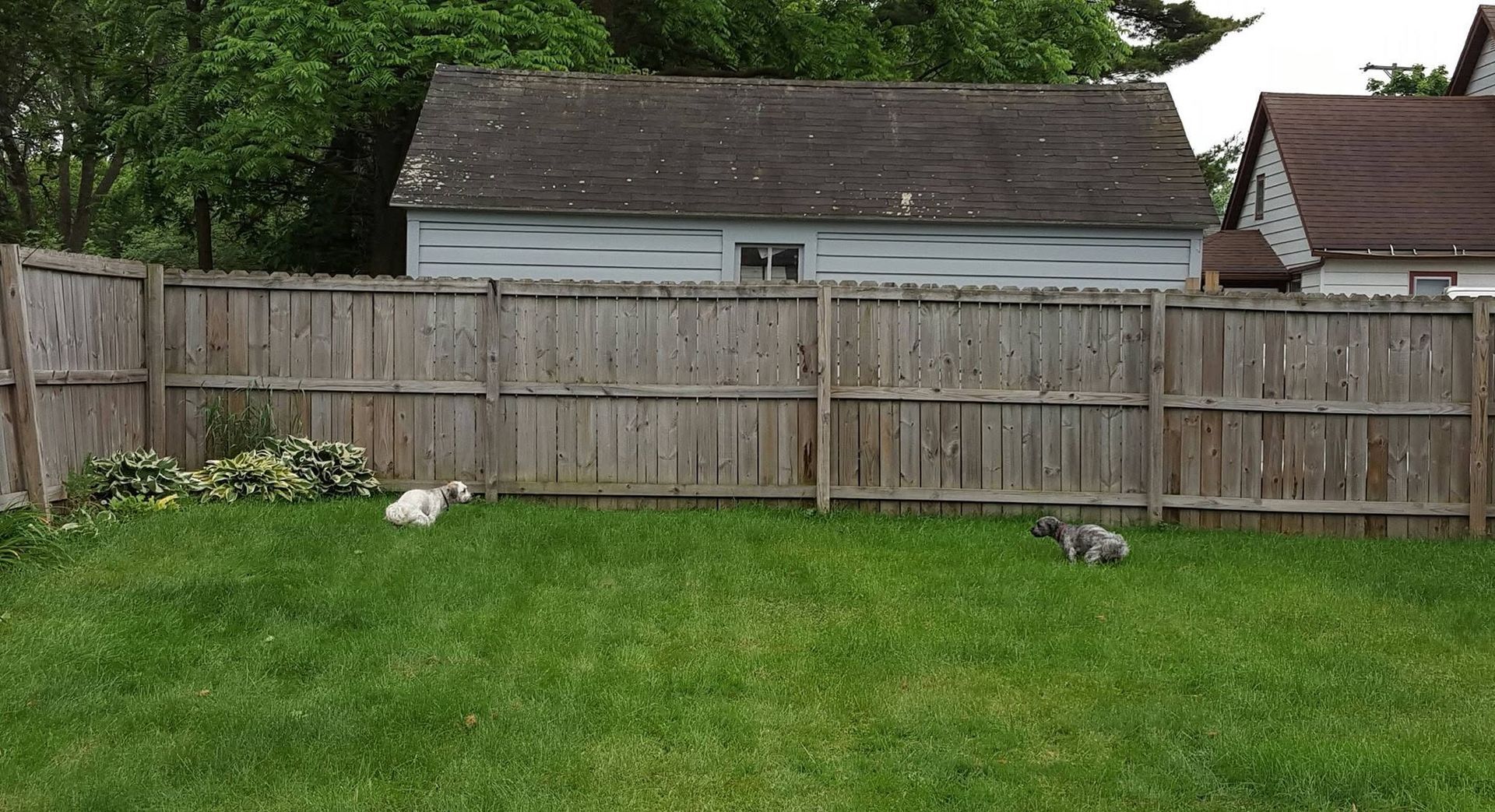
Quick Answer: Flies and gnats swarm certain patches of the yard because leftover dog waste gives them a warm, moist place to lay eggs and feed. A house fly can go from egg to breeding adult in as little as seven days, so a yard that only gets scooped once a week can keep a small population going all season. The fix is not a bug spray, it is breaking the cycle at the source: removing waste before it becomes a nursery for the next generation. Twice-weekly pickup during peak summer heat is the threshold most extension experts point to for cutting fly numbers in a yard, and it is also what keeps gnats and mosquitoes from building up around standing moisture nearby.
You go out to grill, water the tomatoes, or just let the dog do one more lap before bed, and there they are. A little cloud of flies hovering by the fence line. Gnats circling near the same three spots along the back of the yard, no matter how many times you've swept through with a bag. It is not your imagination, and it is not just because it is summer. Certain patches of your yard have become a food source, and the bugs found it before you did.
Why the Same Spots Keep Attracting Bugs
Flies are not randomly wandering into your yard. They are following a scent trail to something specific.
House Flies and Flesh Flies Target Manure Directly
Large house flies and flesh flies are drawn specifically to animal waste, and they will lay their eggs on it within hours of finding it. The moist, nutrient-rich surface gives fly larvae exactly what they need to grow, which is why a pile that has sat for even a day or two starts to look like a magnet.
Gnats Respond to Moisture and Decay Nearby
True gnats and fungus gnats are drawn to damp organic matter, including soil that has been softened and enriched by waste breakdown. Where pet waste has decomposed into the turf, the surrounding soil often stays a little damper and a little richer, which is exactly the kind of microhabitat gnats favor.
It Is Not Only Flies
Cockroaches and rodents will also feed on pet waste when it is available, and a yard that regularly hosts uncollected waste can end up dealing with more than one pest problem at once.
The Timeline Working Against You
This part explains why "I scoop sometimes" often is not enough to keep the bug problem away.
A house fly's life cycle moves fast
In warm weather, a house fly can complete its full life cycle, egg to larva to pupa to breeding adult, in about seven to ten days. Extension entomologists at the University of Georgia note that because the cycle runs this quickly, newly hatched flies are often ready to breed again within days of emerging, which is how a small problem multiplies fast during a hot stretch.
One female fly lays hundreds of eggs
A single house fly can lay 350 to 900 eggs over her lifetime, according to University of New Hampshire Extension, typically in clusters deposited directly into moist organic material like fresh waste. Every one of those clusters is a new generation starting the same seven-day countdown.
Weekly pickup can leave a gap
If waste sits for several days before it is removed, that is enough time for eggs to be laid and larvae to start developing before the next cleanup. Extension sanitation guidance for fly control generally points to removing waste material at least twice a week during warm months to interrupt the cycle before eggs mature into biting, breeding adults.
Bold-label callout
None of this means daily hand-scooping is realistic for most households. It means the removal schedule matters more in July than it does in October, and a yard that gets attention only once a week during peak summer heat is giving the fly life cycle just enough room to work.
More Than Just Annoying
It is easy to treat a few flies as a minor summer irritation, but the pattern behind them is worth understanding.
Flies carry more than they seem to. Because house flies feed and lay eggs on decomposing organic material, they can pick up and spread bacteria as they move between waste, surfaces, and sometimes food prep areas near a patio or grill.
Uncollected waste is a health consideration on its own, separate from the bugs. Public health guidance on pet waste consistently notes that dog waste carries bacteria and parasites that can affect people and other pets if it sits in a yard where children and animals spend time. Keeping the pet-health framing gentle: this is a good reason to stay on top of yard cleanliness generally, not a reason to panic over a fly sighting.
It adds up faster than most owners expect. A single mid-size dog produces a meaningful amount of waste over a year, and in a yard with more than one dog, or a yard that only gets partial attention during a busy summer, the volume sitting out at any given time can be higher than it looks at a glance.
TIP: If you notice flies clustering in the same one or two spots repeatedly, check that exact area first. It is very often the last patch someone missed on a quick pass through the yard, and clearing it usually calms the swarm down within a day or two.
Why Minnesota Summers Make It Worse
Twin Cities yards deal with a specific combination of conditions that pushes this problem further than it would go in a drier climate.
Heat and Humidity Speed Up Decomposition
Warm, humid stretches through July and August are exactly the conditions that shorten the fly life cycle and keep larvae developing quickly. The same heat that makes waste break down faster also makes it smell stronger and attract pests sooner.
Big Yards Mean More Ground to Cover
Many properties across Minnetonka, Eden Prairie, Bloomington, and the rest of the western and southern suburbs have large lots with fenced or wooded back sections that are easy to under-check during a quick walk-through, especially with more than one dog using the yard.
Standing Water Compounds the Issue Nearby
The Metropolitan Mosquito Control District notes that stagnant water anywhere in a yard, from a low spot after rain to a neglected bucket, becomes a breeding site for mosquitoes within days. A yard already dealing with fly and gnat activity from waste buildup, combined with a damp low spot after a summer storm, ends up fighting pests on two fronts at once.
Fenced-In Dog Runs Concentrate the Problem
Dogs tend to use the same corner of the yard repeatedly, and a fenced or gated run near the house means that concentration of waste sits closest to the patio, the grill, and the door people walk through most.
WARNING: Do not spray insecticide directly over areas with uncollected pet waste as a shortcut. It does not address the source, it can wash into the soil and nearby storm drains, and it is not a substitute for actually removing what is attracting the flies in the first place.
Breaking the Cycle: What Actually Works
The good news is that the fix does not require anything exotic. It requires consistency at the right frequency for the season.
Match Pickup Frequency to the Temperature, Not the Calendar
A schedule that worked fine in April may not be tight enough in July. Extension sanitation research on fly control points to twice-weekly removal as the threshold that reliably interrupts the breeding cycle during warm weather, compared with once-weekly removal that leaves a gap.
Check the Corners, Not Just the Open Lawn
Fence lines, the base of trees, and any shaded or damp low spot deserve a second look, since these are the areas most likely to get missed and most likely to stay moist enough to hold larvae longer.
Do Not Let Waste Sit Near Standing Water
If there is a low spot in the yard that collects rain, keeping that area clear of waste and checking it after storms removes one more variable that lets both flies and mosquitoes build up in the same general area.
Consider a Recurring Service If Summer Is When It Gets Away From You
A lot of households manage fine in spring and fall and then fall behind once the heat, travel, and general summer chaos hit. A scheduled pickup service is built specifically to hold that twice-weekly-style consistency without it depending on whoever has the least on their plate that week.
Frequently Asked Questions
Why do flies swarm one specific spot in my yard and not the whole lawn?
Flies concentrate wherever the freshest, most accessible waste is located, which is usually a favorite bathroom corner, a fence line, or a spot near a gate. Clearing that specific area first typically has the fastest effect on the swarm.
Are the gnats around my yard actually connected to dog waste, or is that something else?
Both can be true at once. Gnats are drawn to damp, decaying organic matter, and waste-enriched soil can hold moisture longer than the surrounding lawn, but gnats also breed in mulch, compost, and other damp debris, so a yard can have more than one source feeding the problem.
How often do I really need to pick up in summer to keep flies away?
Sanitation guidance for fly control generally recommends removing waste material at least twice a week during warm months, since that is roughly how long it takes for a fly egg to develop into a larva capable of maturing further.
Can flies from pet waste actually make my family sick?
Flies that feed on waste can carry bacteria on their bodies and legs as they move around a yard and patio, which is one more reason prompt, consistent removal matters. This is a general hygiene consideration rather than a diagnosis of any specific illness, so if a family member or pet shows signs of illness, that is a conversation for a doctor or veterinarian.
Will a bug spray or fogger fix the fly problem if I don't change my scooping schedule?
Sprays and foggers can knock down adult flies temporarily, but they do not remove the eggs and larvae already developing in waste around the yard, so the swarm tends to come back within days unless the source itself is cleared.
Does this problem go away once it cools off in fall?
It eases considerably. Cooler temperatures slow the fly life cycle down significantly, so a yard that struggles in July often needs far less frequent attention by October, though staying on a routine schedule keeps it from building back up during any late warm spells.
Keeping Your Edina Yard Comfortable All Summer Long
Once pet waste is removed consistently, the conditions that attract flies and gnats begin to disappear with it. Keeping fence lines, shaded corners, and favorite bathroom areas clean helps prevent those overlooked patches from becoming recurring pest hotspots. In Edina, MN, seasonal warmth can make this especially important during the height of summer, when decomposition and insect activity both accelerate. A steady cleanup routine keeps the yard fresher, more comfortable, and easier for your family and pets to enjoy.
For homeowners who want to avoid letting summer yard maintenance become another weekly chore, consistent professional cleanup can make a noticeable difference. ScoopyPoo
brings 25
years of experience serving Edina, MN, with an approach focused on thorough, dependable
waste removal
rather than temporary pest control. By keeping the source of the attraction under control, you can spend more time using your backyard and less time watching the same areas for another swarm to appear.