Is Dog Poop Really Bad for Your Lawn and Garden? What It Does to Your Soil
September 26, 2026
Quick Answer: Yes, dog waste damages lawns and garden soil, and it isn't the same thing as fertilizer or manure. It concentrates nitrogen and salts in one small spot, which scorches grass instead of feeding it, and it carries bacteria and parasites that can sit in soil for weeks. Left alone, it also disrupts the microbial balance that keeps turf and garden beds healthy. Pick it up regularly. That's really the only thing that protects the ground underneath it.
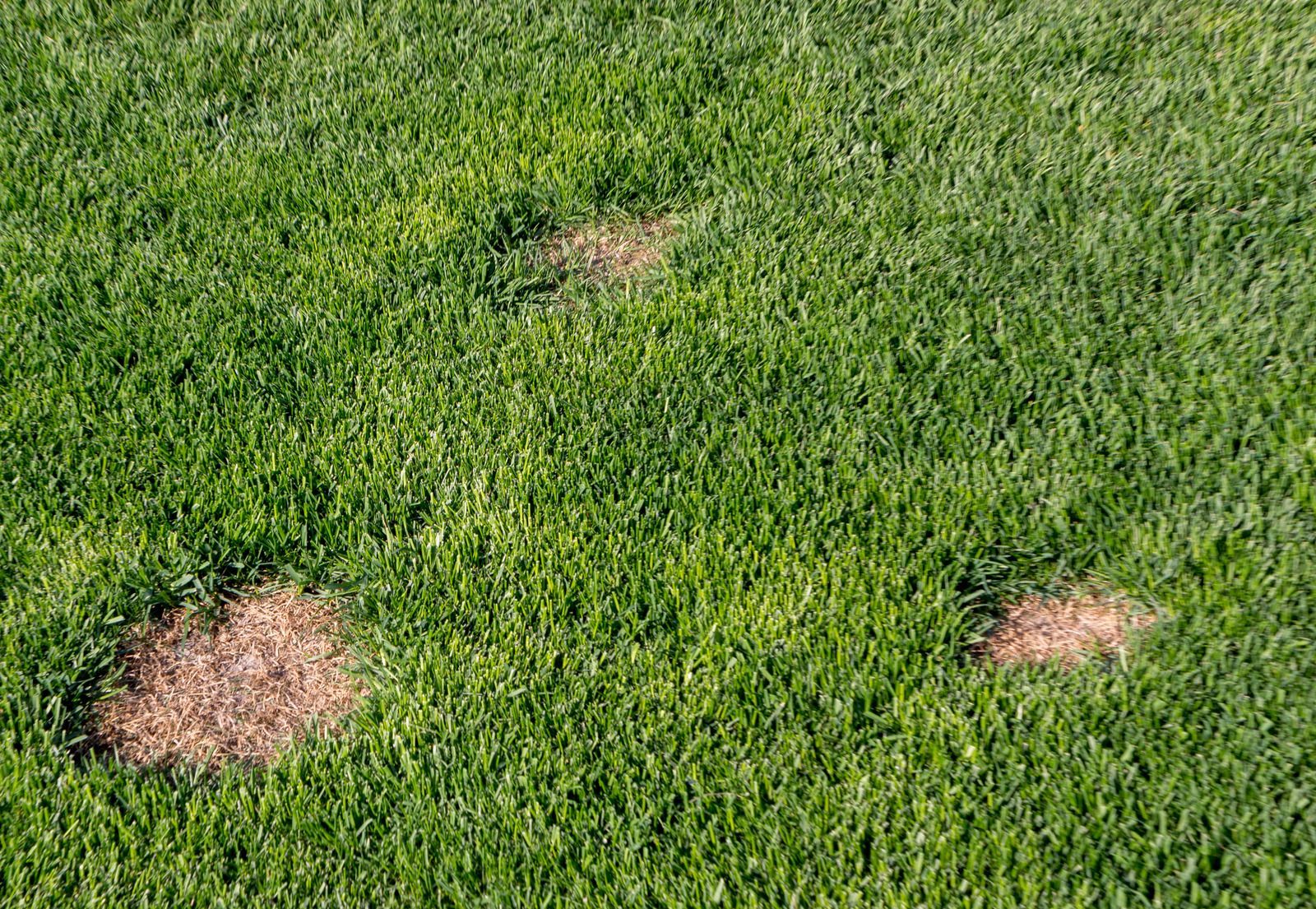
You've probably noticed it before you ever went looking for it: a ring of yellow grass with a darker, almost dead center, usually somewhere your dog visits often. Maybe it's along the fence line, near the gate, or in that one corner of the yard she always heads for first thing in the morning. You've reseeded it once or twice. It came back thin, or it didn't come back at all.
If you also keep a garden, the question gets a little more pointed. You're not just wondering about a patchy lawn anymore. You're wondering what's actually going into the dirt your tomatoes or perennials are rooted in, and whether "it's basically fertilizer" is something you can trust or something you made up to feel better about skipping a chore.
It's a fair question. The answer isn't as simple as either "totally harmless" or "toxic waste." Dog waste does real, measurable things to soil chemistry and soil biology, and once you know what's actually happening under those dead patches, the whole pickup-timing issue makes a lot more sense.
The "It's Basically Fertilizer" Myth
This is the myth that talks most homeowners into leaving waste on the lawn a little longer than they should. Cow manure and horse manure get composted and spread on fields all the time, so the logic seems to follow that dog waste should work the same way.
It doesn't, and the difference comes down to diet. Cattle and horses are herbivores. Their manure is mostly broken-down plant fiber, relatively low in nitrogen for its volume, which is exactly why it can be composted and used as a soil amendment without burning anything. Dogs eat a protein-dense diet, and their waste reflects it — far more concentrated in nitrogen and phosphorus per pound, and never put through a composting process that would stabilize those nutrients into something slower-release. What lands on your lawn behaves like a small, undiluted dose of raw fertilizer dropped in one exact spot. It is not a balanced soil additive spread evenly across an acre.
There's also the pathogen difference. Composted herbivore manure used in agriculture goes through a heat and time process meant specifically to knock down harmful organisms before it touches soil that grows food. A pile in your yard hasn't gone through any of that. It's fresh, it's concentrated, and it behaves nothing like the manure your grandfather might have used on his garden rows.
What Nitrogen Overload Actually Does to Your Grass
Grass needs nitrogen. That's not in dispute — it's the reason lawn fertilizer exists in the first place. The problem with dog waste isn't the nitrogen itself. It's the delivery. Instead of a thin, even application over a wide area, you get a small, saturated dose sitting on a single patch of turf.
Grass can only absorb nitrogen at a certain rate. Past that point, the excess doesn't feed the plant, it damages it, in almost the same way over-fertilizing with a spreader set too heavy will scorch a lawn in visible stripes. The salts in the waste pull moisture out of the grass blades and root zone, and the cells dry out from the inside. That's why the pattern looks the way it does: a dead or badly yellowed center surrounded by a ring of unusually dark, almost too-green grass, where diluted nitrogen at the edges acted more like fertilizer than poison.
Larger dogs and dogs on high-protein diets tend to produce more concentrated waste, so a big breed can do more damage per visit than a toy breed would. Heat speeds the whole process along too, since faster breakdown means the nitrogen release happens quicker and hits the grass harder.
TIP: If you already have a lawn care or fertilization program running, unpicked waste undermines it. You're paying to balance soil nutrients in some areas while overloading others at the same time, and the visible damage tends to get blamed on the fertilizer program instead of the actual cause.
Garden Beds Carry Extra Risk
If your dog has access to garden beds, raised beds, or anywhere near a vegetable patch, the stakes go up a notch. Garden soil usually has less buffering capacity than an established lawn does, since it's turned, amended, and disturbed more often and hasn't built up the same dense root mat. Everything true about lawns applies here, just with less cushion to absorb it.
The bigger concern in a garden is contact with edible plants. Waste-contaminated soil can transfer bacteria to anything growing close to the ground — lettuce, herbs, low-hanging tomatoes, root vegetables pulled straight out of the dirt. Rinsing produce helps, but it doesn't undo weeks of soil contact the way you might hope. Seed germination can suffer too, since young seedlings tolerate a nitrogen and salt spike far worse than mature, established plants do.
WARNING: Never use dog waste as garden compost or work it into soil on purpose, even mixed with other yard waste. Backyard compost piles rarely reach the sustained internal temperature needed to neutralize the pathogens in it, unlike the regulated, monitored processes used for commercial manure composting.
Why a Minnesota Winter Makes Everything Worse
Twin Cities dog owners deal with a version of this problem that warmer climates never have to think about. Once the snow starts sticking around in December, waste doesn't disappear, it gets buried. Visit after visit through a long winter, it accumulates under the snowpack, frozen and paused rather than broken down, hidden from view the entire time.
Then the thaw arrives, usually over a few unpredictable weeks in March or April, and everything that piled up over the winter reappears at once, softened and saturated with meltwater. Instead of a season's worth of small, spread-out deposits, your lawn and garden beds absorb months of concentrated waste in a compressed window, right as the ground is at its most waterlogged and least able to handle the extra load. Same nitrogen and bacteria problem as the rest of the year. It just all arrives at once instead of gradually.
That meltwater doesn't stay put, either. As snow and spring rain move across yards toward the street, they carry whatever they pick up along the way — including waste residue — into storm drains that typically empty straight into the nearest lake, creek, or wetland with no treatment in between. In a region built around thousands of lakes, that runoff path is a big part of why spring cleanup timing matters beyond just your own yard.
Small Piles Add Up Faster Than You Think
Here's another myth worth clearing up: that a single dog, or a yard that only sees the occasional deposit, isn't producing enough waste to matter. On a per-visit basis that might feel true. But the math doesn't stay small for long. One medium-sized dog produces waste daily, and if it's landing in roughly the same handful of favorite spots, which most dogs default to, that's dozens of concentrated nitrogen doses hitting the same square feet of soil every month.
Multi-dog households see this compound even faster, since the same patches often take hits from more than one animal. It's rarely one dramatic event that kills a section of lawn. It's the buildup of small, repeated overloads in the same spots, each one adding to soil chemistry that never gets a chance to reset before the next deposit lands.
What Actually Protects Your Lawn and Garden
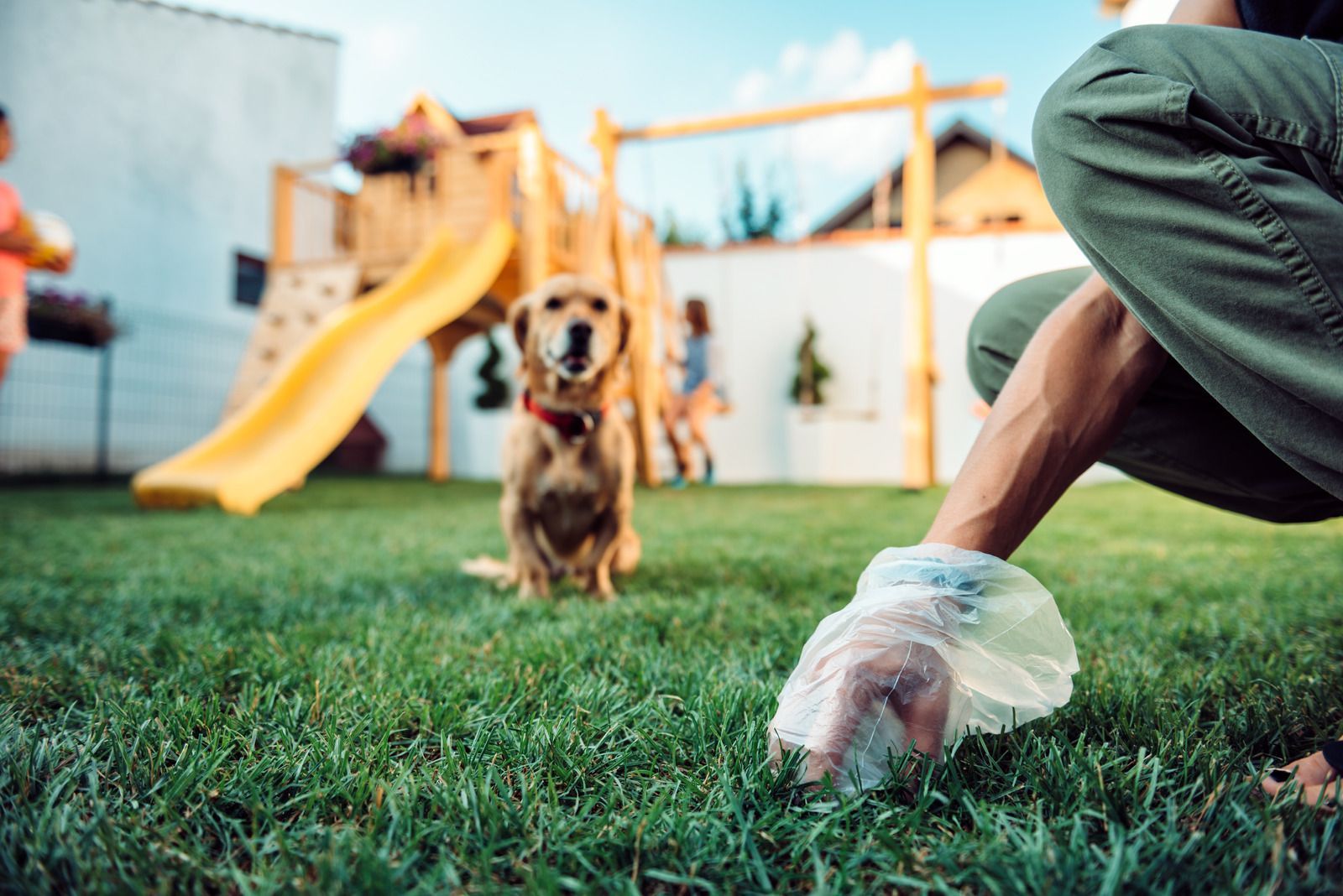
The fix isn't complicated, but it depends on consistency rather than a one-time effort. Waste needs to come off the grass and garden beds before it has time to break down and release its full nitrogen and bacterial load into the soil. The sooner it's picked up after your dog goes, the less time it has to cause damage. This is really a timing problem more than anything else.
Rinsing a spot with a hose after pickup can help dilute any residue left behind, especially in a garden bed or near plants you plan to eat. It's not a substitute for pickup, but it does cut the concentration that soaks in afterward. Rotating the areas your dog uses, where your yard layout allows it, spreads the load out instead of letting one corner absorb the brunt of it season after season.
Once a patch has already turned brown, patience matters more than aggressive reseeding. Soil that's been overloaded needs time for the excess salts and nitrogen to disperse, sometimes with a deep watering to help flush it, before new grass seed has a real shot at taking hold. Reseed too early, into soil that's still chemically out of balance, and you're mostly just wasting seed.
For Twin Cities yards, the days right after the spring thaw matter more than any other week of the year. Clearing a winter's worth of accumulated waste before it fully saturates into softened, waterlogged soil heads off the concentrated damage that a delayed spring cleanup tends to cause, and gets ahead of the runoff window before the heaviest spring rains show up.
Frequently Asked Questions
Is dog poop as good for soil as cow manure?
No. Cow and horse manure comes from herbivores, gets composted, and carries lower nitrogen with neutralized pathogens. Dog waste stays uncomposted, acting like raw fertilizer instead of a balanced amendment.
How long does it take for dog poop to damage grass?
Damage can appear within days in warm weather, since heat speeds the breakdown that releases nitrogen and salts. Cooler weather slows this, but nitrogen reaches roots if waste isn't removed.
Can I compost dog waste for my garden?
Not safely. Backyard compost rarely reaches the heat needed to kill bacteria and parasite eggs in dog waste, so keep it out of compost touching garden soil or food beds.
Will grass grow back on its own after a dead spot from dog waste?
Sometimes, once excess nitrogen and salts disperse from rain or watering. It takes longer than a typical bare patch and often needs reseeding once soil has a chance to rebalance.
Does snow protect my lawn from winter waste buildup?
Not really. It just delays the problem. Waste sits frozen under the snowpack all winter, then releases into soil during spring thaw, concentrating nitrogen and bacteria into one saturated window.
Is it safe to grow vegetables in soil where a dog regularly relieves itself?
It's a real risk for low-growing or raw-eaten plants. Bacteria persist in soil for weeks, and rinsing produce doesn't fully offset that contact. Keeping dogs off garden beds is safer.
Why does the grass around a dead patch look extra green?
Nitrogen concentration drops with distance from the center of the deposit. The center burns grass, while the edge gets a diluted dose acting like fertilizer, leaving it darker and greener.
How often should waste be picked up to protect the lawn and garden?
Daily or every other day is ideal, in warm months when breakdown is fastest, and during spring thaw when winter's accumulation releases at once. Less contact time means less damage.
What Long-Term Yard Protection Actually Looks Like
The pattern holds no matter which yard you're standing in. Dog waste behaves nothing like the composted manure people often compare it to, and once that difference clicks, the endless reseeding cycle stops looking like bad luck. Concentration is the real culprit, not the waste itself. A small, undiluted dose of nitrogen and bacteria sitting in one spot will always outweigh whatever a lawn or garden bed can absorb without damage. Regular pickup keeps that concentration from ever building up.
That kind of consistency is easier to see from outside than from your own yard, which is why the pattern stands out to people who deal with it daily. ScoopyPoo
has spent 25
years watching lawns and garden beds across Edina, MN move through this same cycle, and the difference between soil that gets a break and soil that doesn't is rarely subtle. Dead patches and slow recovery usually trace back to one thing: waste left in contact with the ground too long.