Brown Dead Patches in the Lawn Where Your Dog Goes? Why It Happens and How to Fix It
July 13, 2026
Quick Answer: Brown dead patches in the lawn where your dog goes come from the concentrated nitrogen, salts, and lactic acid in dog urine landing in one small spot, which overwhelms the grass much like a spill of concentrated fertilizer. The classic sign is a dead brown center a few inches across ringed by a band of extra-green grass. You cannot revive grass that is already dead, but you can flush fresh spots with water, steer your dog to a designated area, keep the lawn well maintained, and reseed the worst spots once the growing season is right.
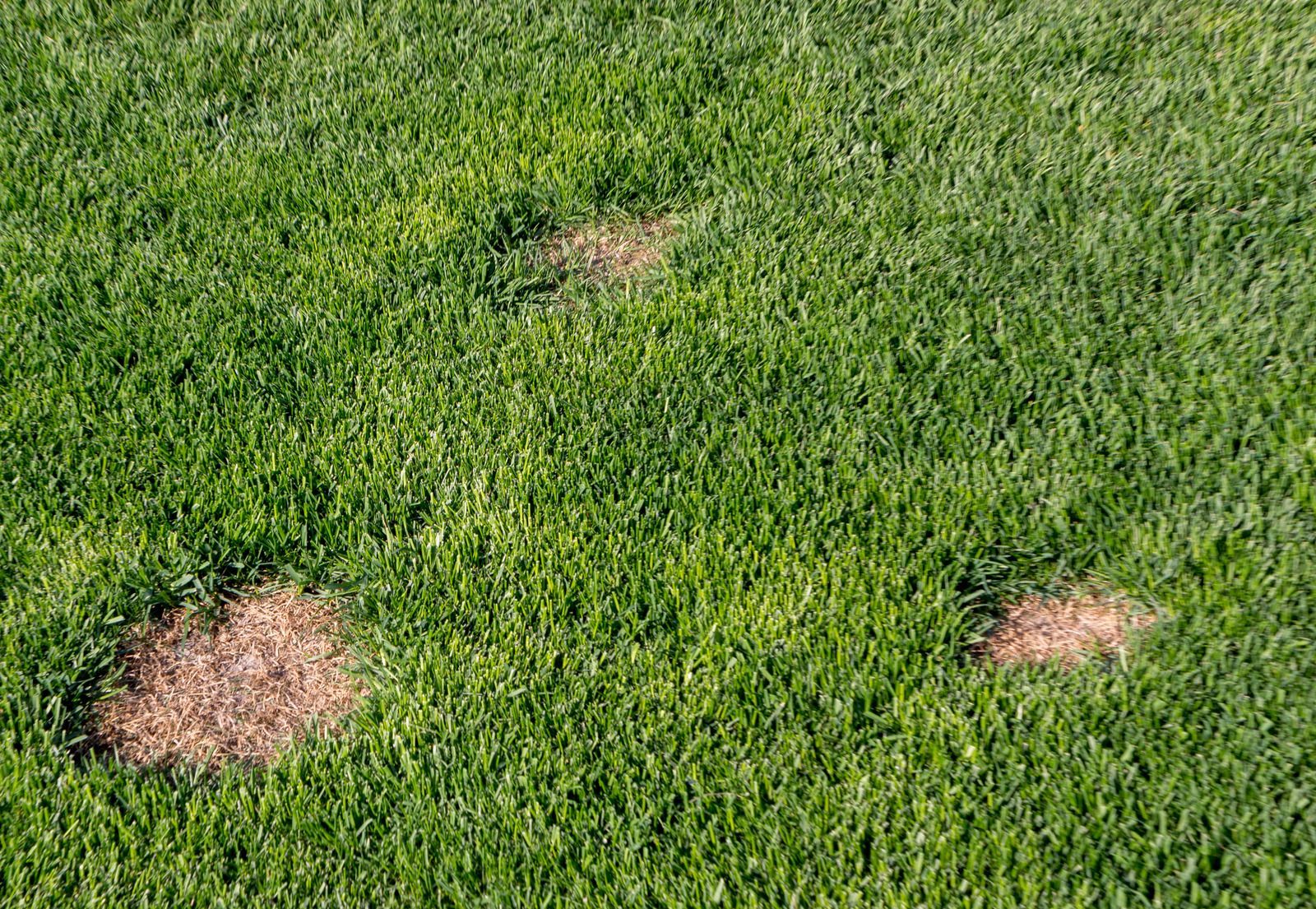
You step into the backyard after a long Twin Cities winter, the snow has finally pulled back, and there they are: round patches of dead, straw-colored grass right where your dog does his business, each one framed by a ring of grass that looks greener and taller than everything around it. Maybe you noticed them creeping in last summer too, always in the same corner. It is one of the most common lawn frustrations for dog owners, and the good news is that it is not a mystery and it is not your dog doing anything wrong.
Those brown dead patches in the lawn from dog urine follow a predictable pattern, and once you understand what is actually happening in the soil, the fixes make a lot more sense. Here is what those spots are telling you, why they land where they do, why Minnesota yards are especially prone to them, and what genuinely helps versus what is a waste of your weekend.
What Those Brown Rings Are Actually Telling You
The pattern is so consistent it is almost a signature. A dead brown center, usually about 3 to 6 inches across, surrounded by a lush green ring roughly 6 to 12 inches wide. Both halves of that picture come from the same source, and understanding them together explains everything.
The nitrogen overload
When your dog digests protein, the leftover nitrogen ends up concentrated in the urine. Grass needs nitrogen, but spread out and in moderation. A whole dose in one spot overwhelms the roots and burns the turf, sometimes browning within 24 hours.
The salts and the lactic acid
Nitrogen is only part of the story. Dog urine also carries salts that stress the grass, and researchers studying cool-season lawns point to lactic acid as a major driver of turf death. Its concentration rises with exercise, so hard-playing dogs leave stronger spots.
The green halo
That bright ring around the dead center is the same nitrogen at a lower, diluted dose. At the edges there is just enough to fertilize rather than burn, so the grass greens up. It stands out most on nitrogen-starved lawns.
Why the Spots Land Where They Do
If the damage seems to cluster in certain places rather than scatter evenly, that is expected. A few factors decide who gets the worst of it.
Squatting versus marking
Dogs that squat to urinate release everything in one concentrated puddle, which is exactly the recipe for a burn. That includes female dogs, puppies, older dogs, small dogs, and plenty of adult males too. Male dogs that lift a leg to mark tend to spray smaller amounts across vertical surfaces and a wider area, so they leave fewer classic spots. This is also why female dogs get blamed so often, even though their urine is chemically no different from a male's. The pattern is about behavior, not some special ingredient.
Size and volume
A bigger dog simply produces more urine per go, so larger breeds tend to leave larger, more severe patches. Two or three dogs sharing the same favorite corner will pile the concentration up fast.
The winter potty path
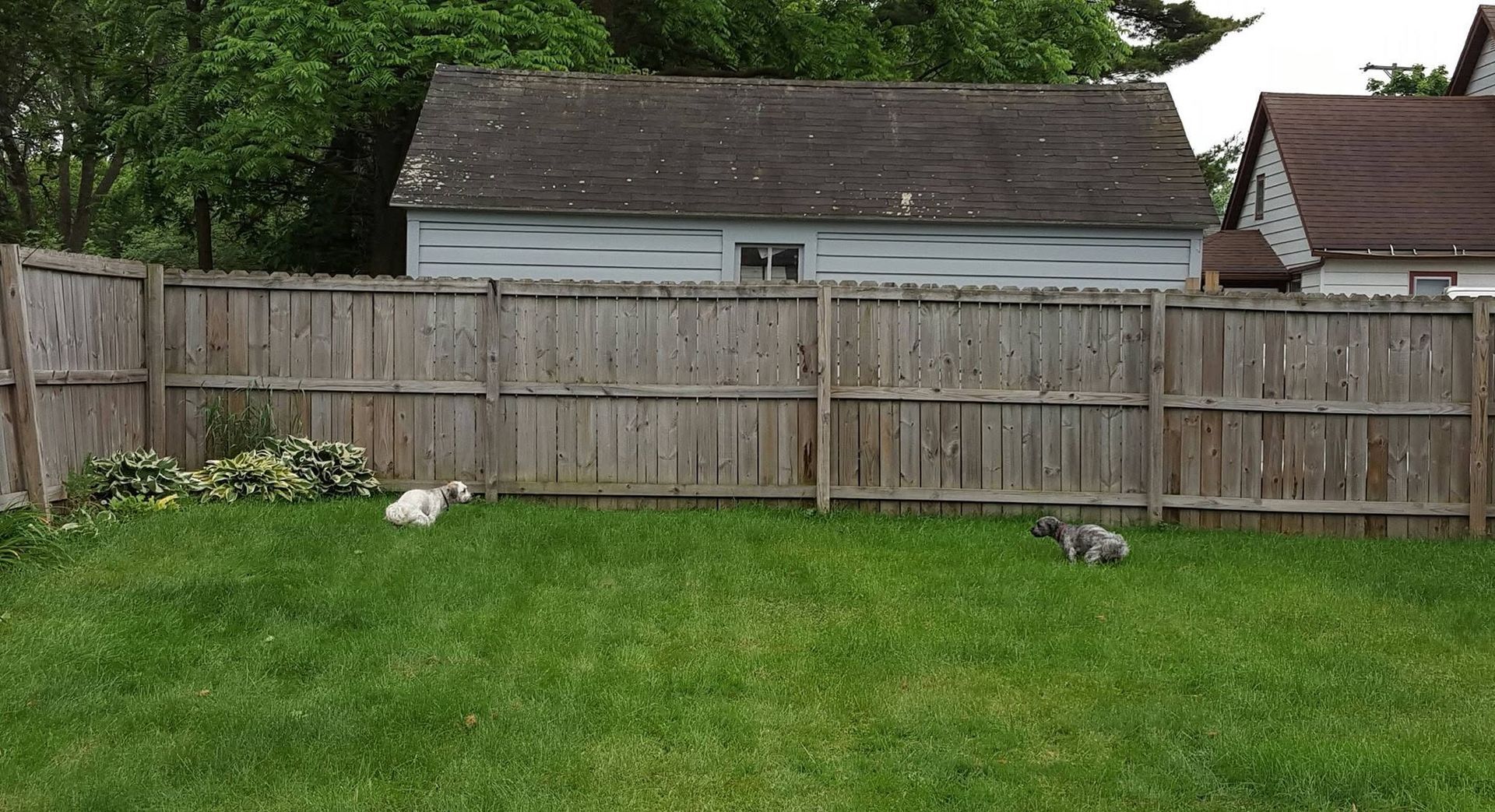
This is the Minnesota wrinkle. When the yard is buried under snow and the wind chill is brutal, most dogs stop wandering the whole yard and stick to a shoveled path or one small cleared patch near the door. All winter, the same square footage takes hit after hit of concentrated urine while the dormant grass underneath cannot process any of it. Then the thaw arrives, and that overused zone emerges as the most damaged part of the whole lawn.
TIP: If deep snow forces your dog onto one small potty patch all winter, rotate the cleared area when you can and give that zone a good soaking with the hose during the first warm stretch of spring. Flushing out the built-up salts before the grass wakes up gives it a far better shot at bouncing back.
Is It Urine Burn or a Lawn Disease?
Before you treat anything, it is worth confirming that dog urine is really the culprit, because a few common turf diseases can mimic the look and call for completely different handling.
Look for the green ring
Urine damage almost always shows that actively growing, darker-green halo around the dead center. Most fungal diseases do not. If you see a crisp dead patch circled by grass that is clearly greener and growing faster, urine is the likely cause.
Check the blades
With diseases like dollar spot or brown patch, the dying leaf blades often look water-soaked and tend to mat down, and you may spot fine webbing in the early morning. Urine-burned blades dry out and turn straw-colored without that matted, soaked appearance.
Note the location and history
Disease tends to spread in irregular sweeps across an area. Urine spots show up as discrete circles in the places your dog actually frequents, like along a fence line or that path near the door. If the map of the damage matches your dog's routine, that is a strong clue.
What Actually Helps and What Does Not
Here is where a lot of well-meaning effort goes sideways. Some of the most popular fixes do nothing, and a couple can even backfire. This is what holds up.
Water it in, and do it fast
The single most effective response to a fresh spot is to flush it with plenty of water within a few hours, ideally right after your dog goes. A generous soak dilutes the nitrogen and salts before they can burn, and it hydrates the grass on top of that. It will not undo the extra greening, but it can be the difference between a faint mark and a dead crater.
Give your dog a designated spot
Training your dog to relieve himself in one mulched or out-of-the-way area is the most durable solution there is. It takes patience up front, but it moves the damage off your prime turf for good. Praise and consistency do most of the work here.
Keep the whole lawn strong
A vigorous, well-tended lawn resists urine damage and recovers faster when it does get hit. Mowing on the taller side, around 2.5 to 3 inches for most local grasses, following a sensible fertilizer schedule, and watering deeply during dry spells all help. A lawn that already has steady nitrogen also shows less of that dramatic green-ring contrast.
Consider tougher grass where you reseed
If you are patching or renovating anyway, leaning on more tolerant species like tall fescue gives you a lawn that stands up to your dog better over the long haul.
WARNING: Skip the dog-diet hacks and home-brew soil treatments. Supplements, pills, and additives that promise to change your dog's urine, along with dumping baking soda or gypsum on the spots, have no proven benefit for your lawn and some can be genuinely harmful to your dog. Anything that changes what your dog eats or drinks is a conversation for your veterinarian, not a lawn-repair shortcut.
Repairing the Spots That Already Died
Once grass is truly dead, no amount of watering brings it back. The move is to reset those spots so fresh grass can fill in.
Clear and flush first
Rake out the dead grass and give the bare area a deep, repeated watering to push the leftover salts down and out of the root zone before you plant anything new.
Reseed, plug, or sod
Clumping grasses like tall fescue and Kentucky bluegrass will not creep back in to close a bare spot on their own, so those need to be spot-seeded, plugged, or sodded. If you buy sod or a repair mix, try to match what is already growing so the patch blends in.
Mind the timing and keep paws off
For cool-season Minnesota lawns, fall is generally the best window for seeding and larger renovations, with spring as a secondary option. Whenever you seed, keep your dog off the new grass until it has been mowed a few times and rooted in, or you will be right back to bare dirt.
Stay ahead of the buildup
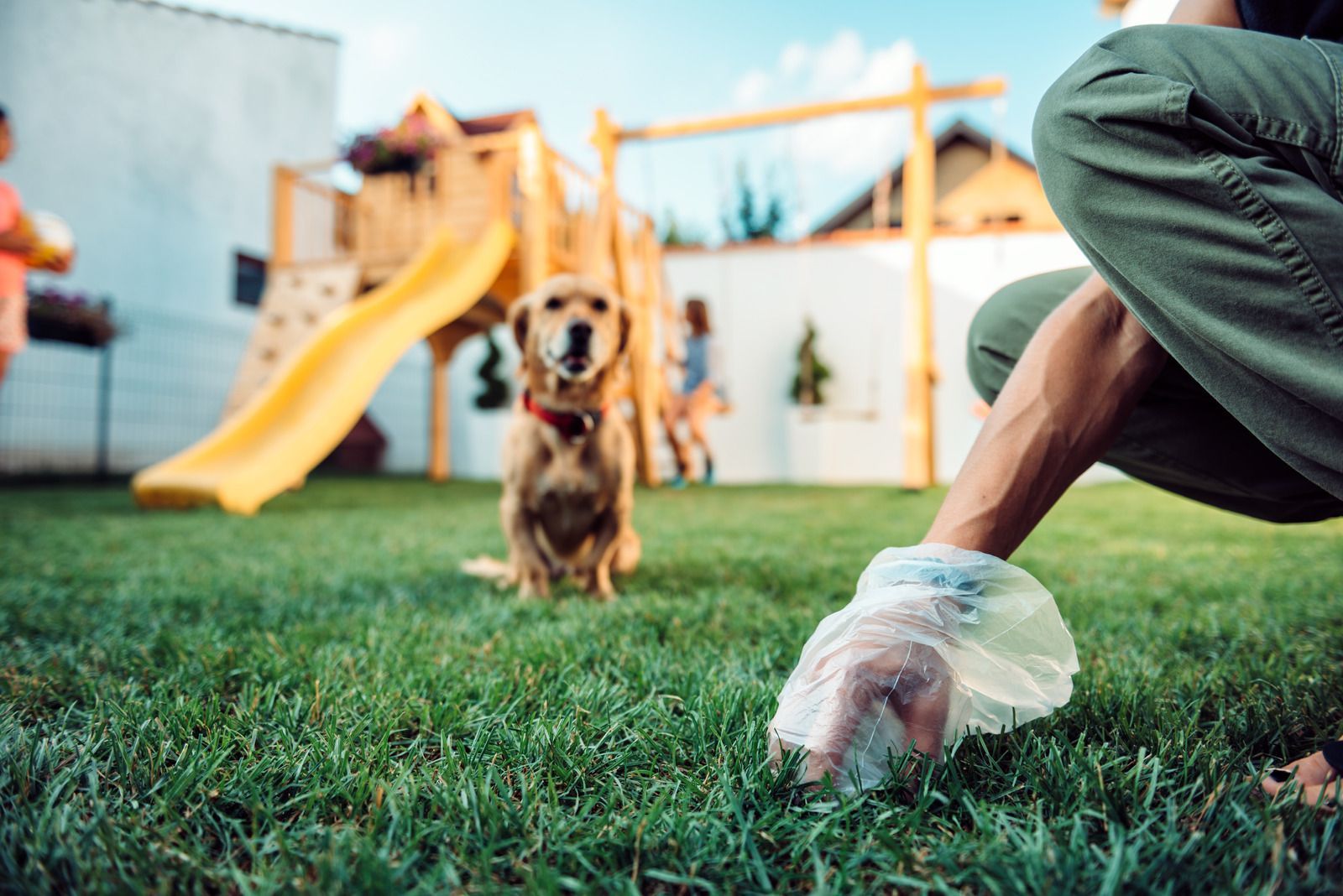
A yard that gets cleared and cared for consistently is simply easier to keep healthy. When waste is not left to sit and pile up in the same corners week after week, it is easier to spot problem zones early, keep the ground open to water and air, and keep the whole space usable for your family and your dog.
Frequently Asked Questions
Why is the grass greener around the dead spot instead of dead too?
That green ring is the same nitrogen from the urine, just spread thin. In the center the dose burns, but at the edges it acts as a light fertilizer, so the surrounding grass greens up.
Are female dogs really the reason for the brown spots?
Not because of their urine itself, which is chemically no different from a male's. Female dogs, puppies, and many males squat and release everything in one concentrated puddle, and that concentration is what burns the grass.
Does watering the spot after my dog pees actually work?
Yes, when you do it soon. Flushing the area within a few hours dilutes the nitrogen and salts before they burn the grass. It will not remove the green ring, but prevents a dead one.
Why do the patches look so much worse in early spring here?
Through a Minnesota winter, dogs use one small cleared area near the door, concentrating months of urine while dormant grass cannot process it. When the snow melts, that overworked patch is uncovered all at once.
Can I bring the dead grass back to life?
No. Once grass is dead, it stays dead. You can rake out the dead material, water deeply to flush leftover salts, and reseed or sod the bare spot. In the Twin Cities, fall reestablishes best.
How do I know it is urine and not a lawn disease?
Look for the actively growing green ring around a dead center, which points to urine. Disease patches usually lack that halo, and the blades look water-soaked and matted rather than dry. Matching your dog's spots confirms it.
Living With a Dog and a Lawn You Both Enjoy
Brown dead patches where your dog goes are not a sign that anything is wrong with your dog or that your lawn is beyond saving. They are the predictable result of concentrated nitrogen, salts, and lactic acid landing in one place, made worse by cool-season grass, dry or dormant conditions, and the tight winter potty zones that come with a Minnesota season. Once you can read the green-ringed pattern, you can respond to it: flush fresh spots quickly, steer your dog toward a designated area, keep the lawn strong, and reseed the worst spots when the timing is right. A little consistency turns a frustrating, spotty yard back into a green space you and your dog can share.
Book a cleaner, healthier yard you can actually use — Dog urine spots are only part of what wears a yard down over a long Twin Cities year, and a lawn that is left cluttered with waste in the same corners week after week is harder to keep green, open, and usable. Serving Edina, Minnesota, ScoopyPoo
has kept metro yards clean for 25
years, is BBB accredited, and offers dependable recurring visits and one-time deep cleanups so your outdoor space stays sanitary and ready to enjoy. Reach out to set up a service schedule and take the chore off your plate for good.